Florian Hofherr
PhD student @ TUM CVG
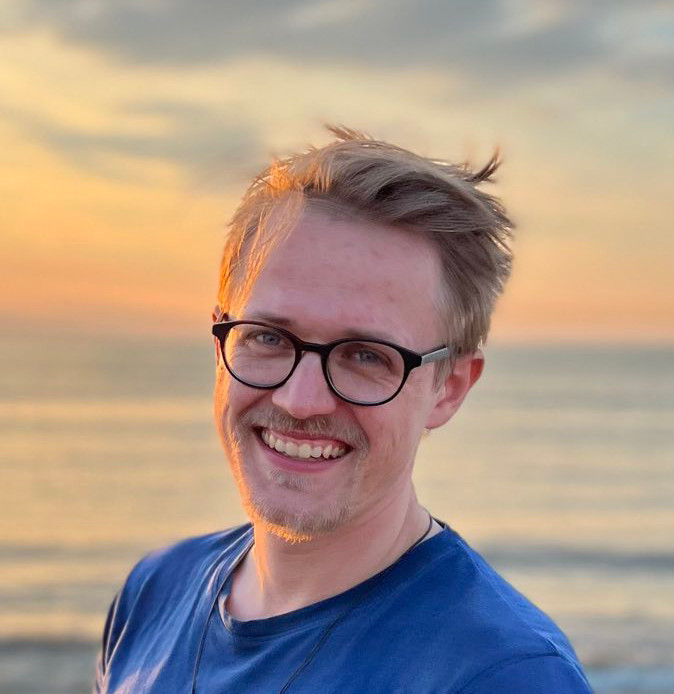
I am a PhD student in the Computer Vision Group at the Technical University of Munich (TUM), under the supervision of Prof. Daniel Cremers. My research interests focus on neural fields and their applications to various challenges such as geometry representation, dynamic scene reconstruction, and material modeling. More recently, I have gained hands-on experience with diffusion models in an industrial research setting as an Applied Scientist Intern at Zillow.
I hold an M.Sc. in Mathematics in Science and Engineering, with a specialization in control theory and flight system dynamics, and a B.Sc. in Engineering Science, both from the Technical University of Munich. I also spent semesters abroad at the Federal Institute of Technology Zürich (ETH) and the University of Queensland.
Publications
2026
-
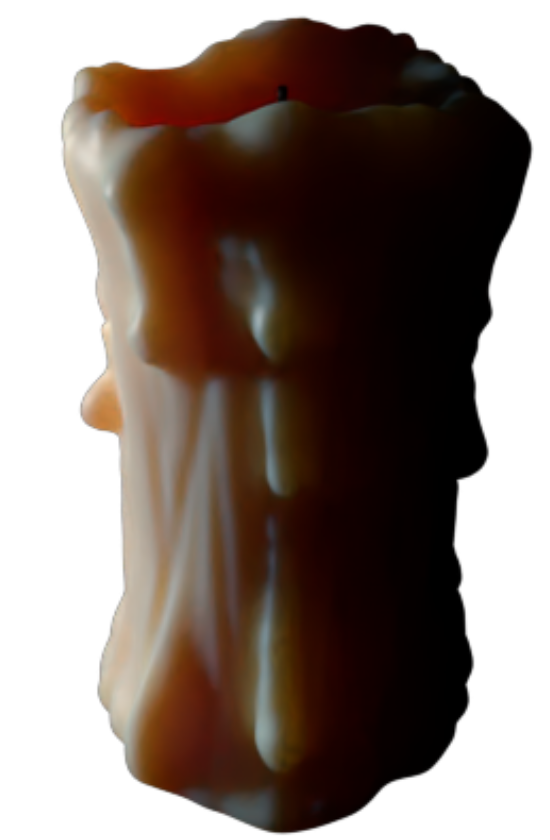 DIAMOND-SSS: Diffusion-Augmented Multi-View Optimization for Data-efficient SubSurface ScatteringarXiv preprint, 2026
We use diffusion models for novel-view synthesis and relighting to augment sparse multi-view captures for relightable 3D reconstruction. We reconstruct the scene using Gaussian splatting with a subsurface scattering extension and introduce loss terms to correct inconsistencies.
2025
-
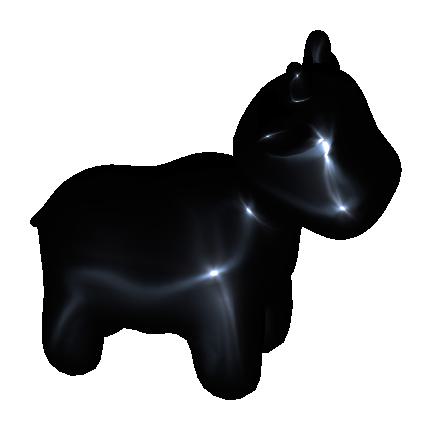 WACV, 2025 (Oral Presentation)
We perform an extensive comparison of different neural BRDF models. Moreover, we propose a novel input mapping that ensures reciprocity by construction and an enhancement of neural BRDFs based on an additive split architecture. -
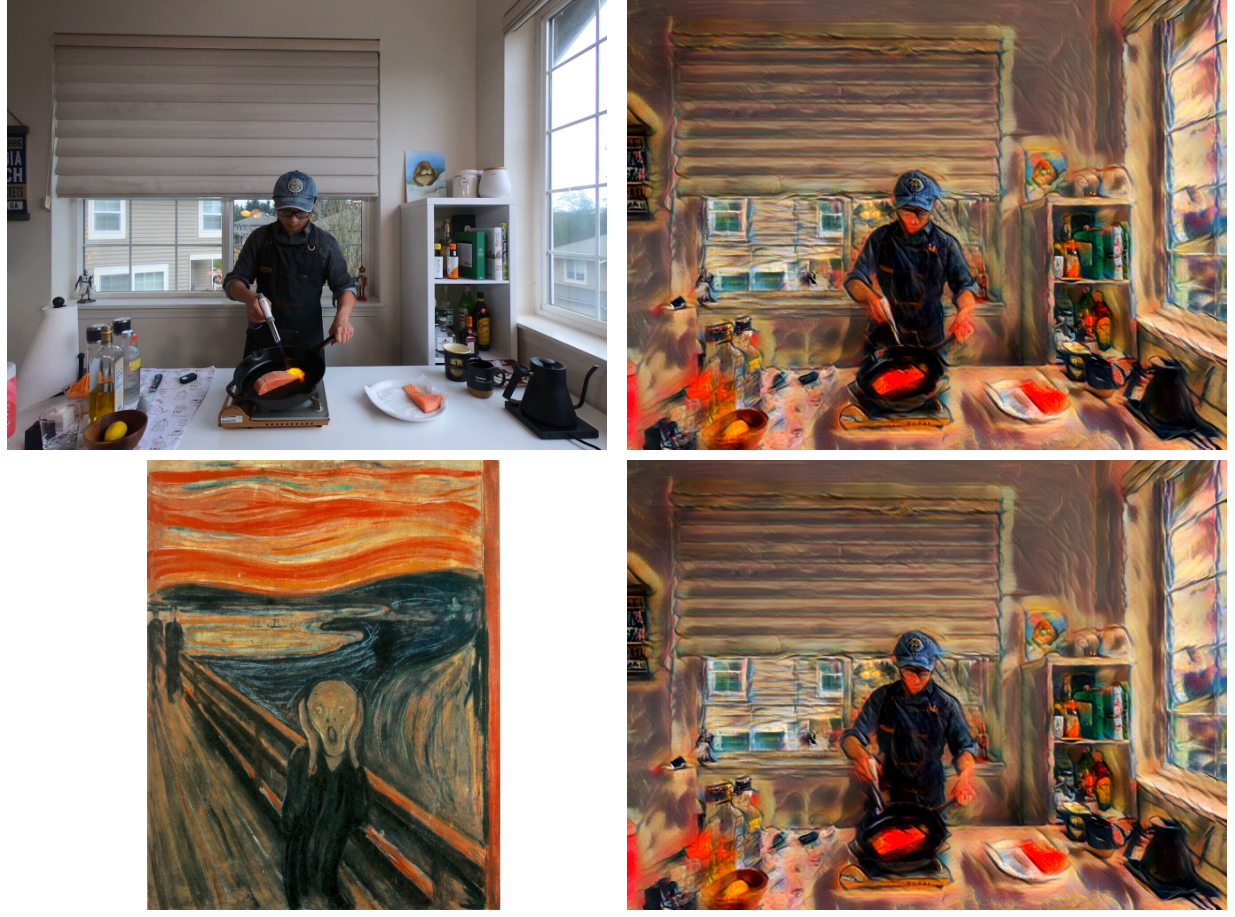 ZDySS–Zero-Shot Dynamic Scene Stylization using Gaussian SplattingarXiv preprint, 2025
We propose a zero-shot approach for stylizing dynamic 3D scenes that operates on feature-augmented Gaussian splatting representations, enabling spatio-temporally consistent results across views and time.
2024
-
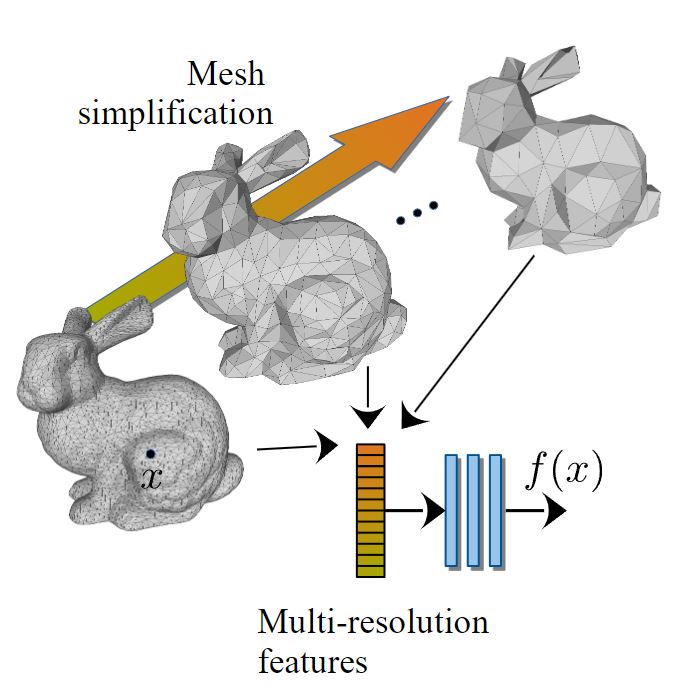 ECCV, 2024
We adapt the idea of parametric multi-resolution feature grid encodings from Euclidean space to meshes. This enables neural fields with smaller MLPs resulting in a significant evaluation speedup.
2023
-
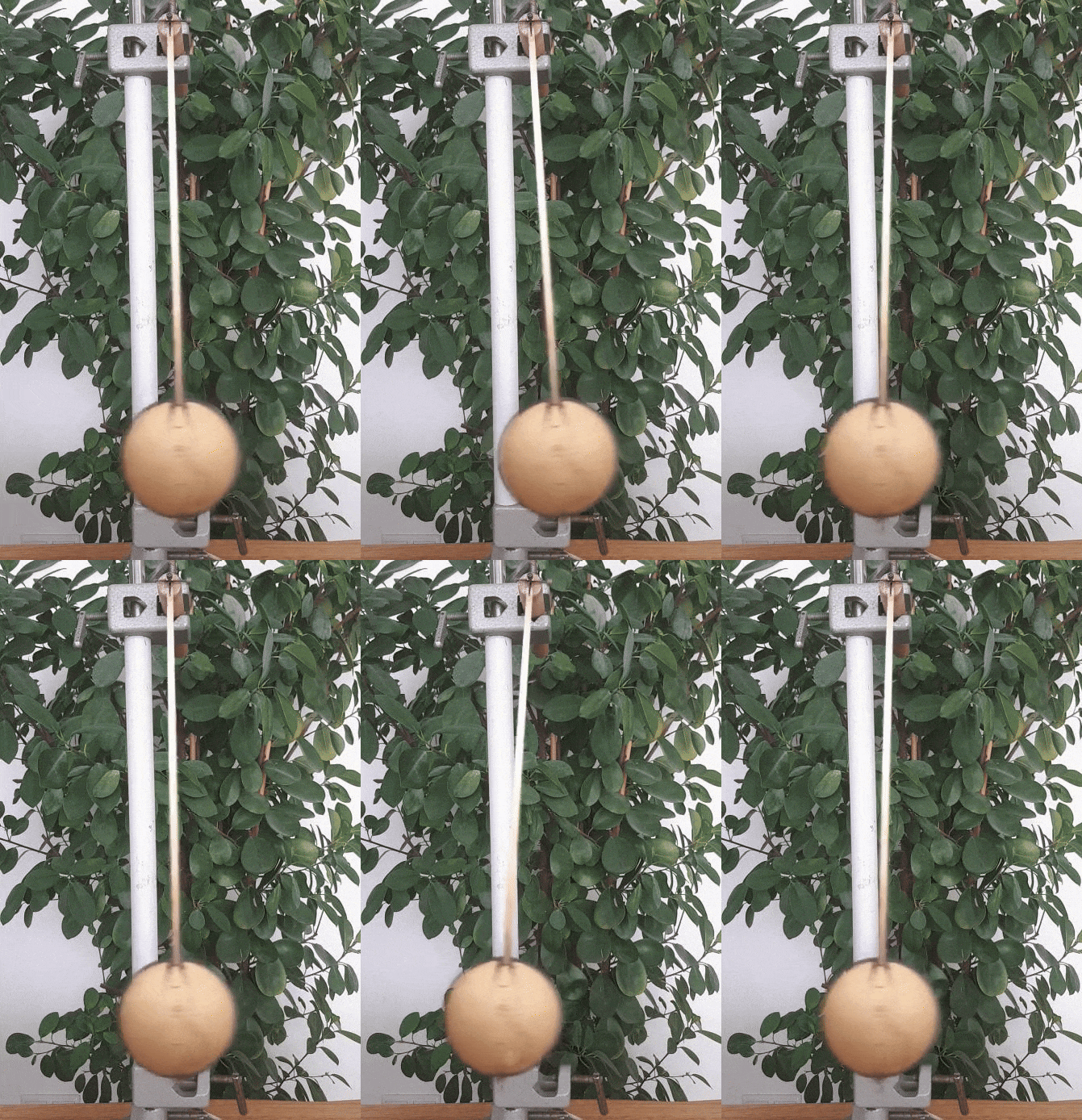 WACV, 2023 (Spotlight Presentation)
We integrate implicit representations for appearance with explicit physical dynamics models to reconstruct dynamic scenes. This approach not only enables accurate reconstruction but also supports physically realistic scene editing.
2018
-
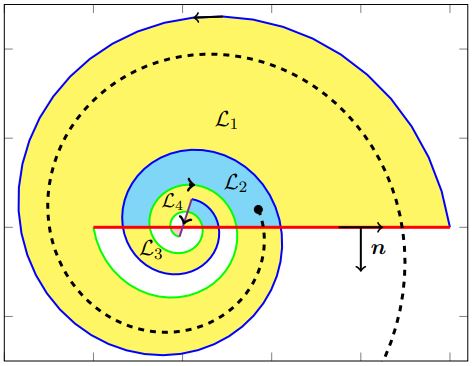 Lagrangian Transport Through Surfaces in Compressible FlowsSIAM Journal on Applied Dynamical Systems, 2018